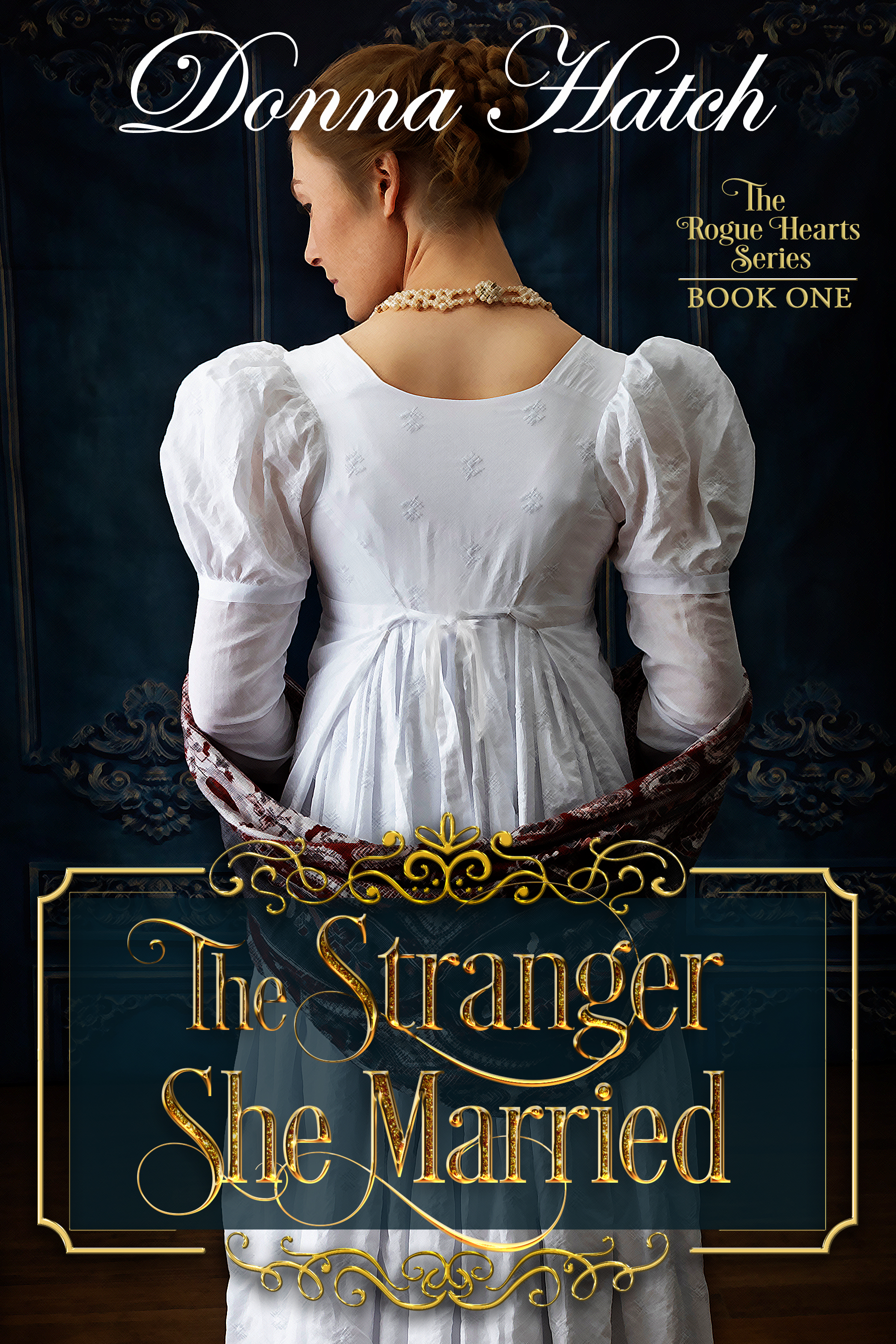
The Stranger She Married
An Excerpt by Donna Hatch, Regency Romance Author
Available on Amazon
Mrs. Hancock beamed as Alicia reached her side, put an arm around Alicia, and brought her into their circle. “Miss Alicia Palmer, allow me to introduce Lord Amesbury.”
Even more devastating up close, Lord Amesbury turned to her. His piercing blue eyes threatened the strength in her knees. Though taller than most ladies, Alicia still had to look up to meet his gaze. No other color existed in those eyes; no green or gray, only deep, dark blue, like the fathomless depths of the ocean.
All the other men she had met lately, namely those her uncle insisted she consider for a husband, had taken careful note of her figure. But this gentleman only looked into her eyes. Very deeply.
Lord Amesbury inclined his head. “Miss Palmer.” His resonant, bass voice touched her very soul.
Alicia met his frank gaze and a sensation she did not quite understand stirred within her until breathing became a conscious effort. Mrs. Hancock discreetly coughed, and Alicia realized she’d been locked in eye contact with the Viscount much longer than appropriate.
Unable to pull her eyes away, Alicia sank into a curtsey. “My lord.”
No longer merely polite, his smile broadened, warmed, transforming an already handsome face into a perfectly stunning visage. Sensuality radiated off him, not in a manner that left her feeling threatened, but in a way that left her breathless for more. More of what, she did not know. But she wanted to find out.
“Miss Palmer,” Lord Amesbury said, “May I have the next dance?”
Alicia blinked. She looked back at Elizabeth who smiled encouragingly. Mrs. Hancock also smiled and nodded, but a touch of disappointment tainted her approval, reminding Alicia the dear lady had hoped her own daughter would attract the attention of the very eligible Lord Amesbury. That he’d singled out Alicia seemed a dream.
She squelched all hope that she might hold his interest. Surely only politeness motivated him to dance with the plainest girl first. He’d soon turn his attention to the beautiful ladies.
Finding her voice, Alicia replied, “I would be delighted, my lord.”
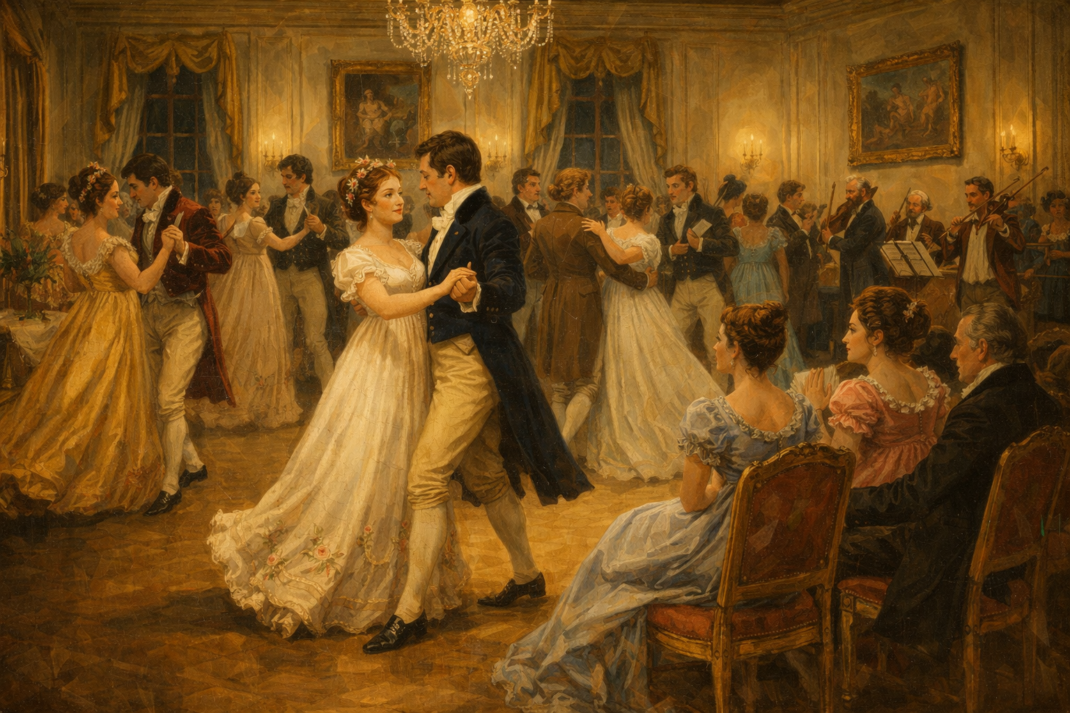
As the final notes of the current dance ended and the next began, Lord Amesbury offered his arm. She took it, an unfamiliar quiver beginning in her stomach. The art of dancing, she found as the set began, had not abandoned her as completely as her wits. The handsome viscount danced with athletic grace, his attention focused upon her. The warmth of his hand seeped through their kidskin gloves. He held her gently, firmly.
A playful glint touched his sapphire eyes. “I must warn you. Now that we’ve danced, my aunt will take it upon herself to ask you your opinion of me. She will most certainly interrogate me regarding you.”
She met those probing eyes and her mouth curved. “Oh? Has your aunt become your self-proclaimed matchmaker?”
A wry smile touched his lips. “Of course. I’m thirty and not yet married. She feels it her duty to ensure I produce an heir before I’m too old. Despite my efforts to delay that obligation, she persists.”
Alicia nodded, her smile deepening at his indelicate statement. “That is a dilemma.”
“Since you and I have only just met, it will be difficult to offer a fair assessment of your character. And if I say anything positive about you, she’ll plan the wedding.” His smile brightened, lighting up his stunning face.
Alicia missed her step. Even while dancing with the very handsome Duke of Suttenberg two Seasons ago, such a keen attraction for a man had never overcome her as it did tonight. Yet she was nearly twenty, for heaven’s sake, not a missish schoolgirl!
“Your aunt is a strong woman and a kind lady, my lord. I am sure you can reason with her.”
“I suppose she possesses a good heart deep, deep down inside, but be truthful; she’s sharp-tongued and outspoken.”
She laughed and then clapped her hand over her mouth. “My lord! She might hear you.”
He chuckled. “Fear not. We needle each other as frequently as possible. I say worse things to her face. I enjoy watching her squirm and plot a counter- attack.”
That reminded her of the playful banter she shared with her cousin Robert. “I don’t recall her ever mentioning you, my lord.”
His smile turned self-deprecating. “I’m one of those relations no one mentions.”

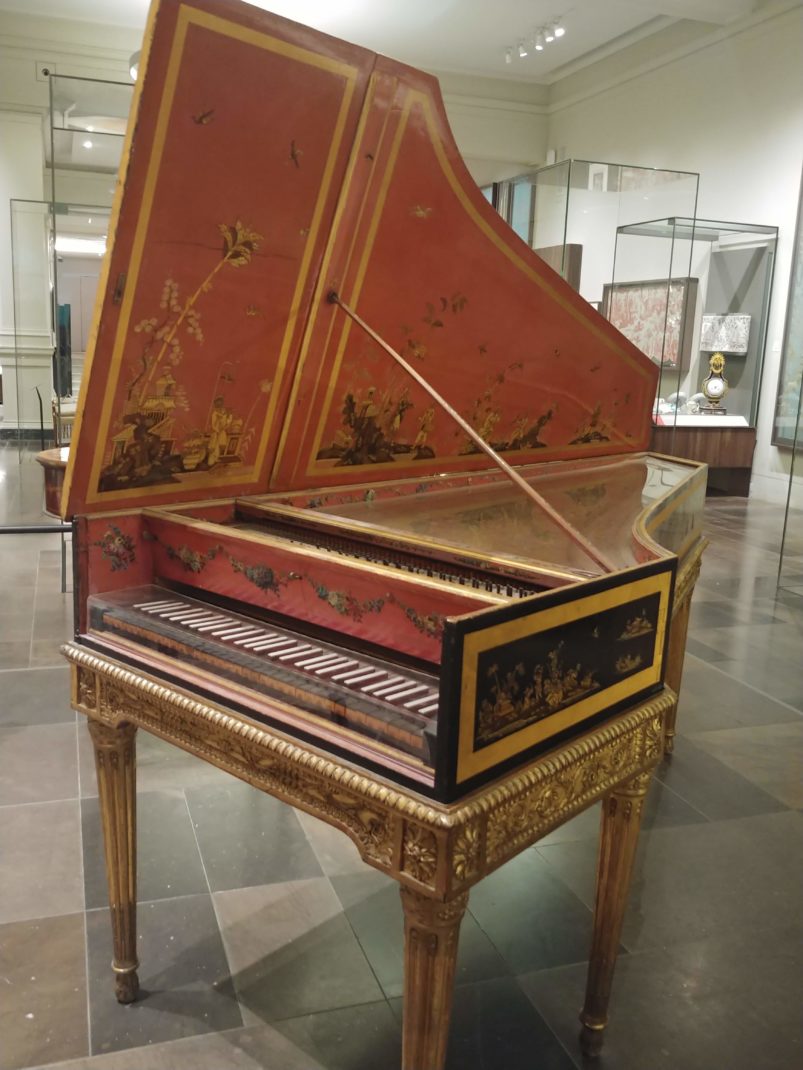
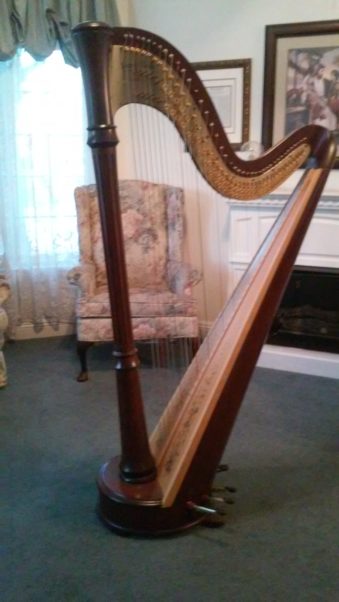
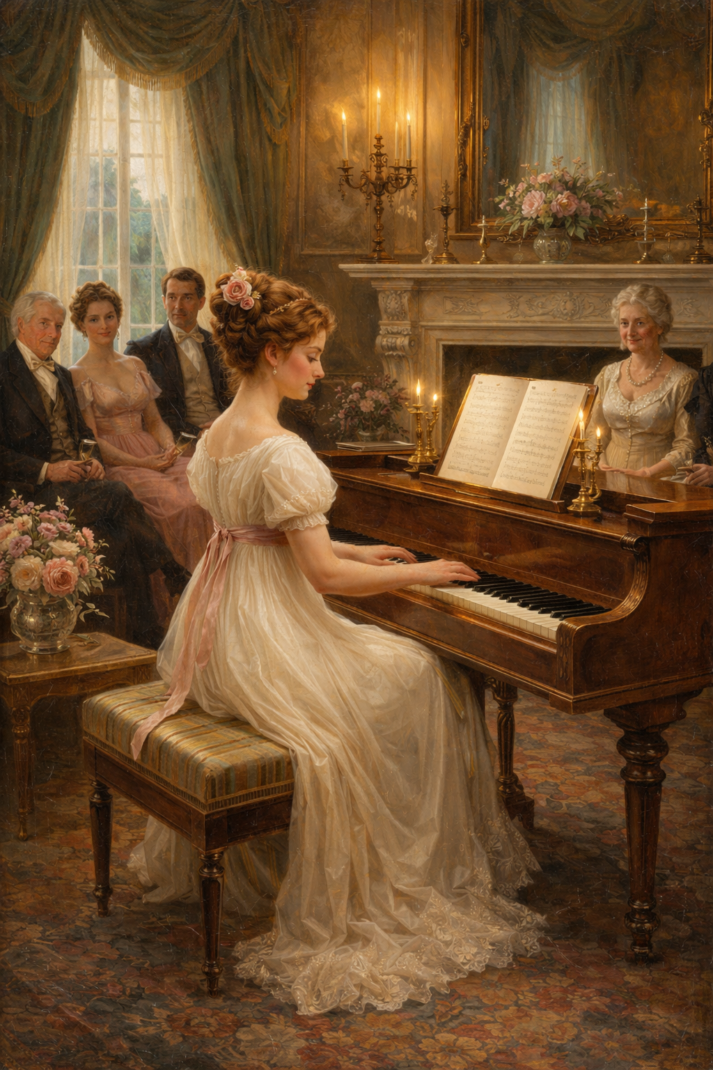
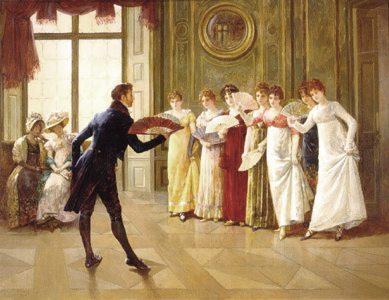
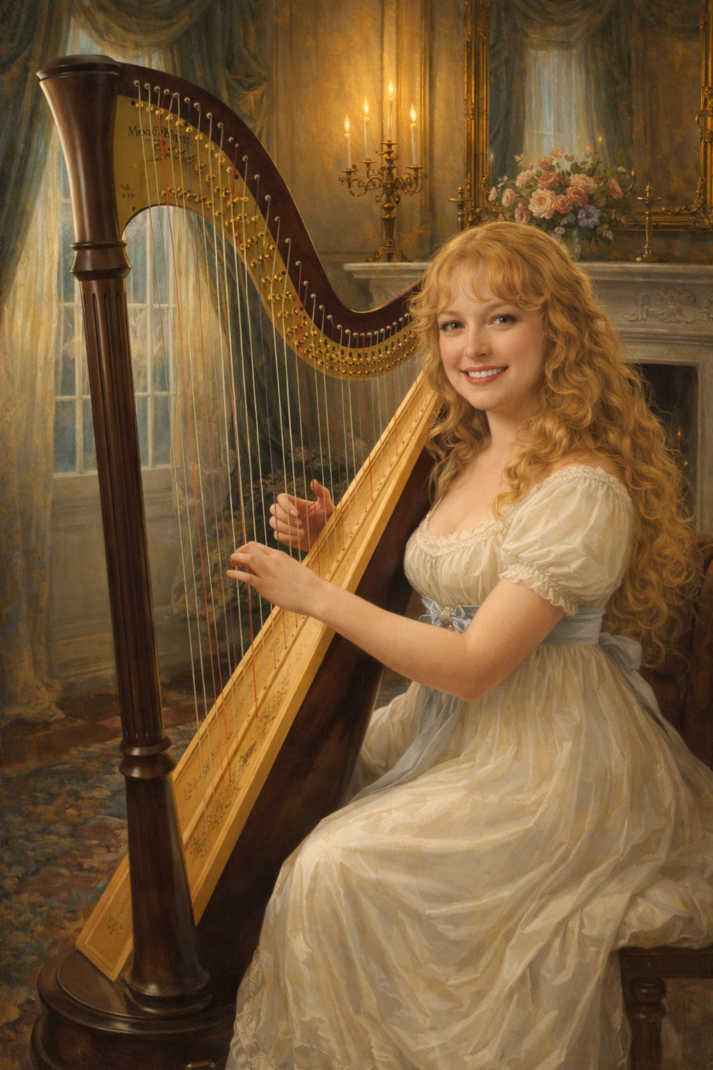
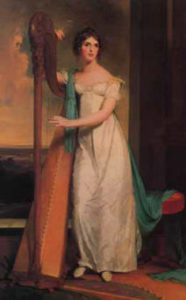 Why Music Mattered in Regency Society and Social Life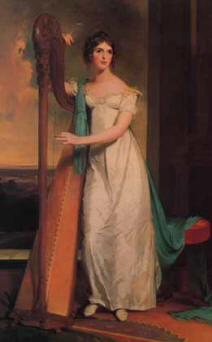


I love how accomplished you are both in music and writing. I don’t know how you did all that and raised 6 children!