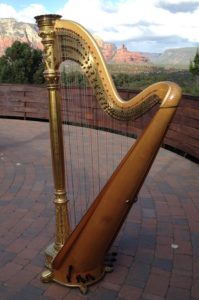
If you’re like me, the very thought of a harp stirs something inside you–something magical. I was twelve years old when I first heard about the chance to take lessons, and something lit up inside me — a pull so immediate and certain that I knew, before I’d touched a single string, that this was mine. It’s been a love affair ever since.
Learning the harp is no small undertaking. It takes years to master, and a great deal of that time is devoted not just to reading music, but to the painstaking work of technique. There’s a reason it’s considered the second most difficult instrument to learn. (Apparently bagpipes are the hardest — though I suspect harpists and pipers might debate that over tea.)
Early Harps
The earliest harps were beautiful but limited. Each one was tuned to a single key, meaning a musician had to retune the entire instrument to play a song in a different key. Later innovations brought levers — small mechanisms attached to each string that a player could flip by hand to raise or lower a note. It was a significant improvement, but it demanded its own kind of choreography: quick fingers, precise timing, and years of practice.
Now, I should point out that many of today’s professional and amateur harpists prefer the lever harp. They are sm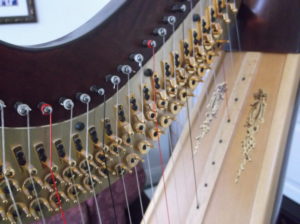 aller, lighter, easier to transport, and have a distinctly different tones. And changing keys on the fly or playing accidentals using levers takes remarkable skill.
Pedal Harps
Sometime in the 17th century, some unsung genius introduced the pedal harp. Instead of flipping multiple levers, a harpist could now shift a note — across every octave simultaneously — with a simple movement of the foot. Moving the F pedal, for example, changed every F string on the instrument by a half step. It opened up an entirely new world of musical possibility, even if mastering the timing remained its own considerable challenge.
The Eighth Pedal
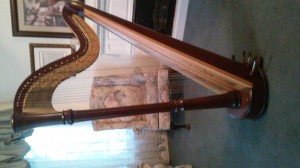
For most of history, pedal harps came with an eighth pedal that opened a panel in the back of the harp to allow access for changing strings. This is the kind of harp my heroine would have played in my novels — fitting, since music in the Regency era was about far more than pleasure. It was woven into the very fabric of social life.
 Modern Pedal Harps
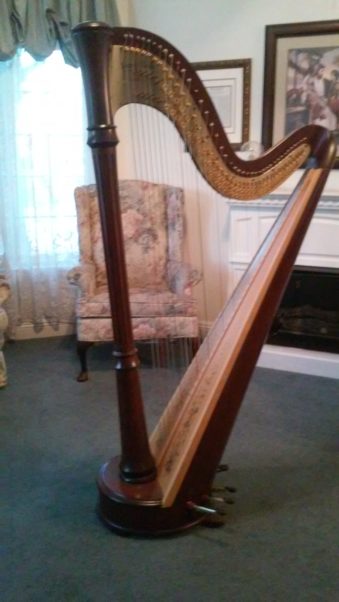
Today’s pedal harps have replaced that panel with oblong access holes, through which strings are fed into the soundboard and wound around tuning pegs. With hat change, the eighth pedal disappeared, leaving the modern harp with seven — one for each note of the scale.
Today’s harps have replaced that panel with oblong access holes, through which strings are fed into the soundboard and wound around tuning pegs. With that change, the eighth pedal disappeared, leaving the modern harp with seven — one for each note of the musical scale.
Seven pedals. Forty-seven strings. And still, after all these years, the sound of a harp stops me in my tracks.
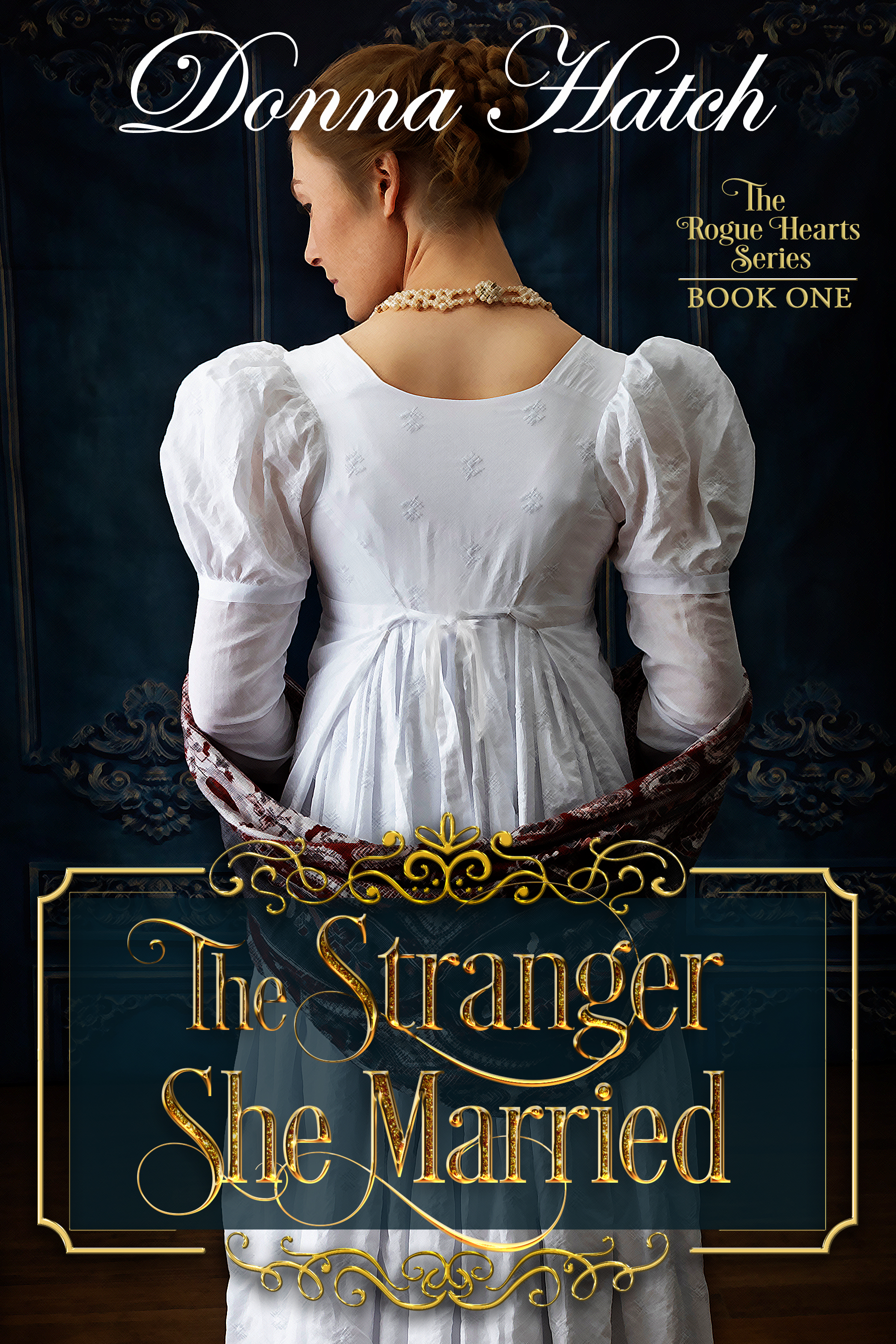
If the harp has captured your imagination too, I’d love for you to meet some of my Regency heroines who share this passion. The Stranger She Married, Courting the Countess, Heart Strings and The Viscount’s Christmas Wish each feature a harpist at the heart of their stories— you can find them below:


Interesting info. I didn’t know that bagpipes are considered the hardest to master. Years ago I met a guy who had chosen to celebrate his 45th birthday by undertaking to learn to play the bagpipes! I was so impressed that someone would take up an instrument at age 45!
The 8th pedal was to make ‘echoes’ a tonal effect, and not all harps had them…. They were introduced by the composer J B Krumpholtz.